A froggy pose newborn portrait shows a sleeping baby with the chin resting on their hands. It is never one photo: at least two supported frames are merged afterward. Shooting it that way lowers the risk of a fall, but a medical review warns that the position of the baby’s neck remains a concern.
Quick answer:
- The froggy pose is a composite of supported frames.
- Support helps prevent a fall, but the neck is still positioned.
- A 2020 medical review calls this kind of posing potentially dangerous.
- A calm, sleeping baby is not proof that a pose is comfortable.
- Natural poses with a neutral neck make a complete gallery.
This post covers one pose inside a longer session. If you are planning the whole shoot, start with shooting a newborn session for the edit, then come back here.
What is the frog newborn pose?
The frog newborn pose, also called the froggy or head-in-hands pose, is a posed portrait where a baby appears to balance their chin on their hands with the knees tucked underneath. The picture looks like one moment, but it is assembled from separate frames. Adults support the baby while each frame is taken, and the edit joins the frames and removes their hands.
No newborn can hold this position alone, which is why trade guides such as Click Magazine say the pose should always be done as a composite for safety. We don’t give posing instructions for it here because of the concerns below.
Is the froggy pose safe for newborns?
It has not been shown to be safe, and there is credible reason for concern. A composite guards against a fall, the risk most photography guides discuss, but the baby’s head and neck are still placed in the same position. Medical reviewers object to that placement.
The clearest source is a 2020 scoping review by Edit Nagy and Regina Finta in the Journal of Physical Therapy Science. It names the froggy pose directly and raises three points:
- The joint between a newborn’s skull and spine is unstable, and bending the head back may compress the arteries that supply the brainstem.
- Deep sleep lowers muscle tone and removes some of the reflexes that would otherwise protect a baby from an extreme position.
- White noise helps babies sleep and can dull their response to pain, so a quiet baby may still be uncomfortable.
The authors suggest neutral neck positions and natural poses instead of passive posing. Those gentler frames can still get newborn retouching for skin and color, with no need to move the baby again.
What the evidence does not show
The review draws on 11 studies, and most of the neck research was done post-mortem or looked at ordinary sleeping positions. Nobody has measured live newborns in this pose, for obvious ethical reasons, so the harm is a plausible risk without a measured rate.
A risk you can’t see during a session is hard to manage from behind a camera, and the baby gains nothing from the picture.
Why newborn photographers disagree
Professional opinion is split between photographers who offer the pose with safeguards and those who have dropped it. The disagreement is over whether training and a spotter answer the concern.
| Position | Who holds it | The reasoning |
|---|---|---|
| Offer it only with training | Summer Elizabeth | An advanced pose that needs a workshop, hands-on practice and constant support |
| Refuse it on safety grounds | Sarah Lake | Head and neck injury, and hands under the chin that can restrict the airway |
| Refuse it and teach natural posing | Sandra Coan | If a pose needs a course to avoid injuring a baby, it may not belong in a session |
Our advice as retouchers is to leave it out. A sleeping baby with a soft expression, clean skin and good light carries a gallery without it.
Why parents ask for the froggy pose
Parents often ask because they saw the picture online and assumed the baby held the position. A short conversation before the session gives them the facts and another option.
Three points cover it:
- The image is built from several photos, and the baby can’t hold that position alone.
- Medical reviewers have raised concerns about the neck position.
- You will show them poses you prefer, with examples from your own portfolio.
If you drop the pose, say so on your website and in your welcome guide, so the request doesn’t first come up on session day.
5 gentler poses to shoot instead
These poses keep the head in line with the body and don’t ask the baby to hold a position. They are lower risk, but you still need newborn safety training, a warm room and an adult within reach. Stop whenever they need a feed, a cuddle or a break.
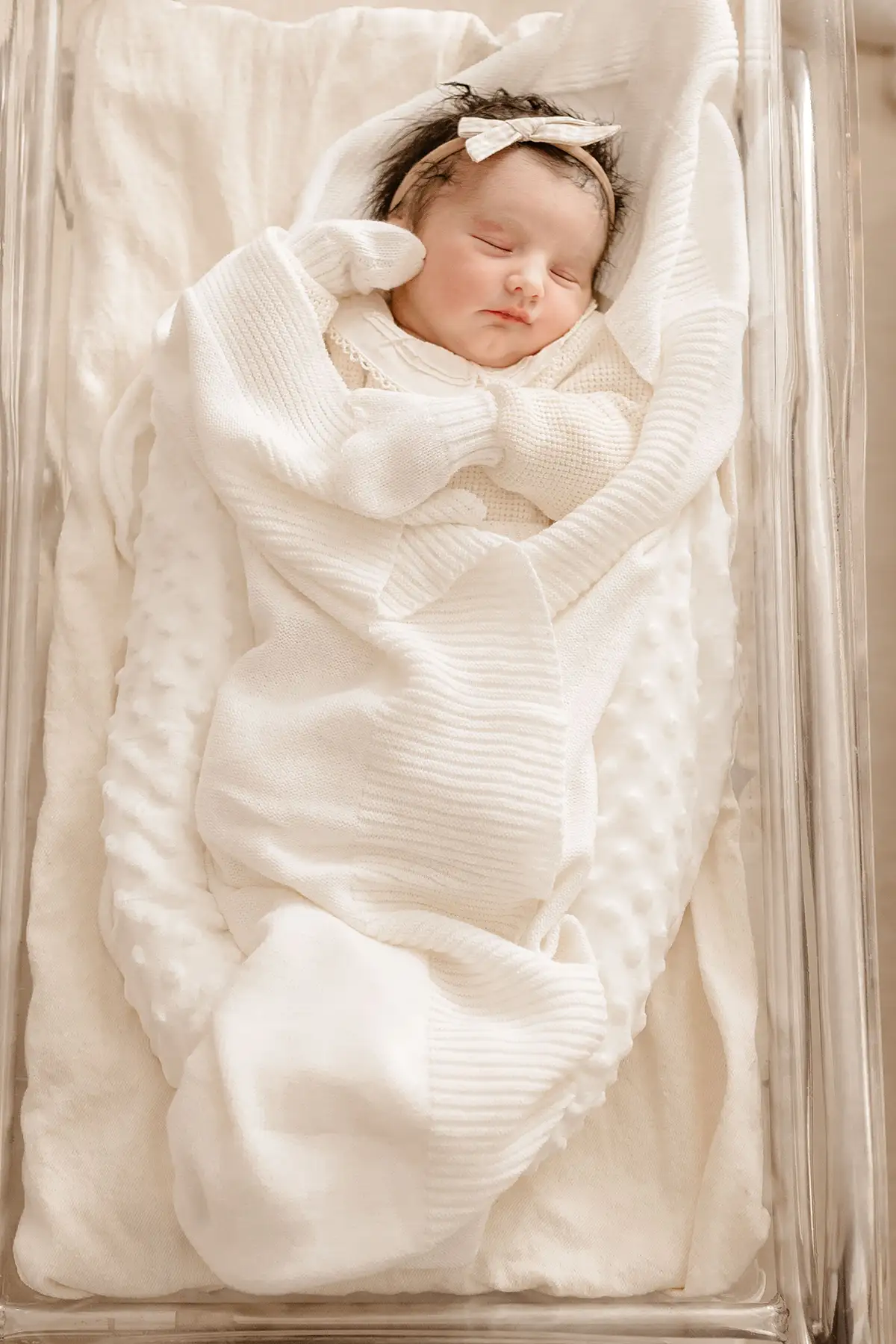
1. Wrapped on the back
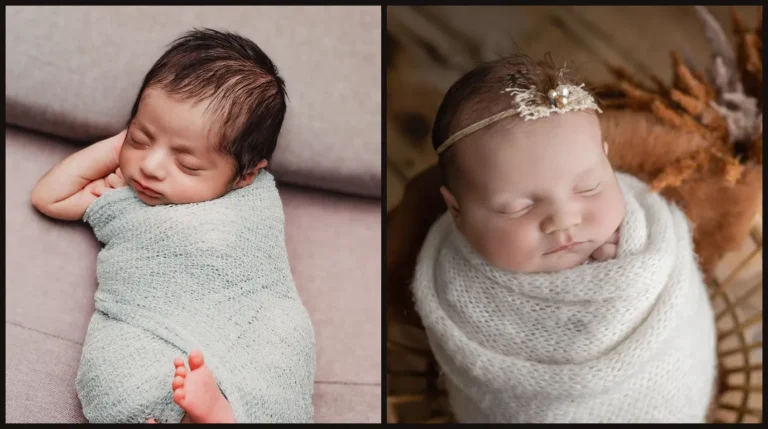
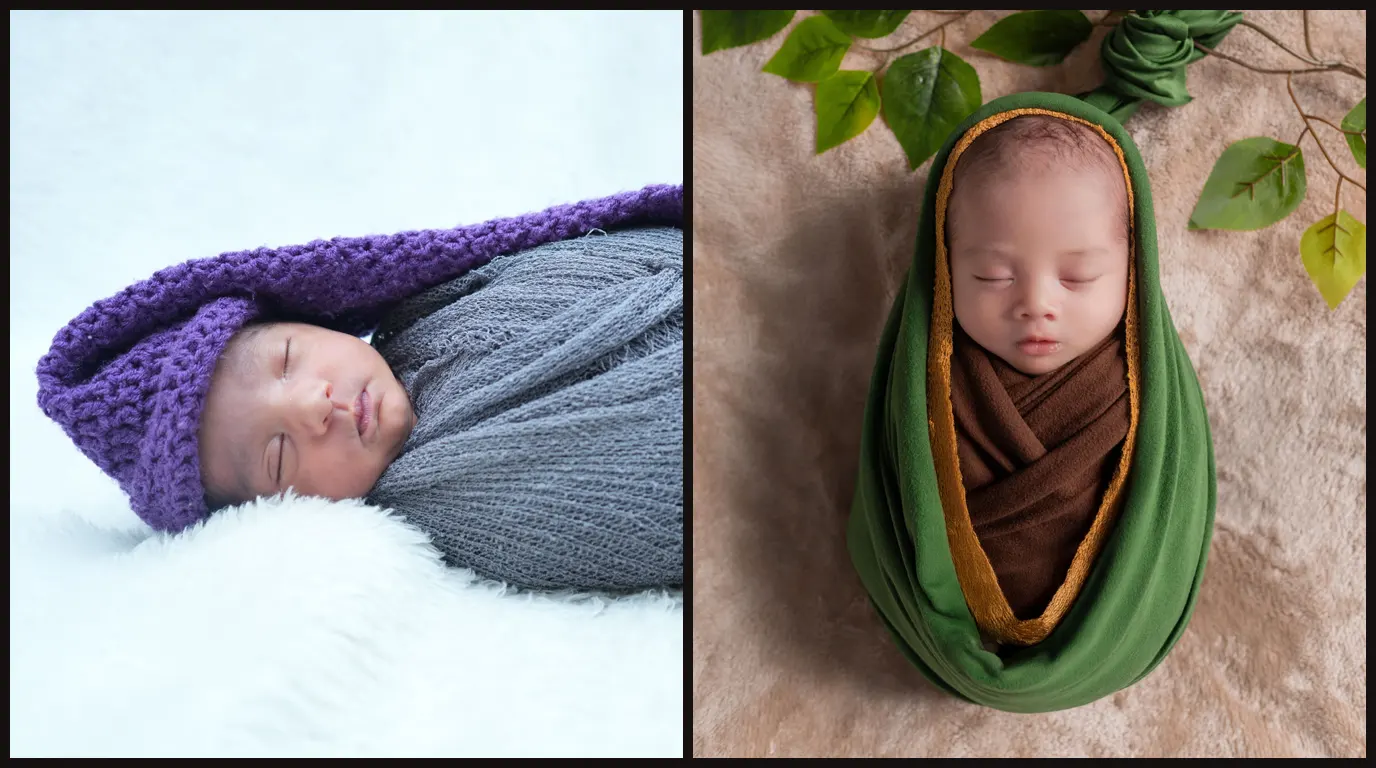
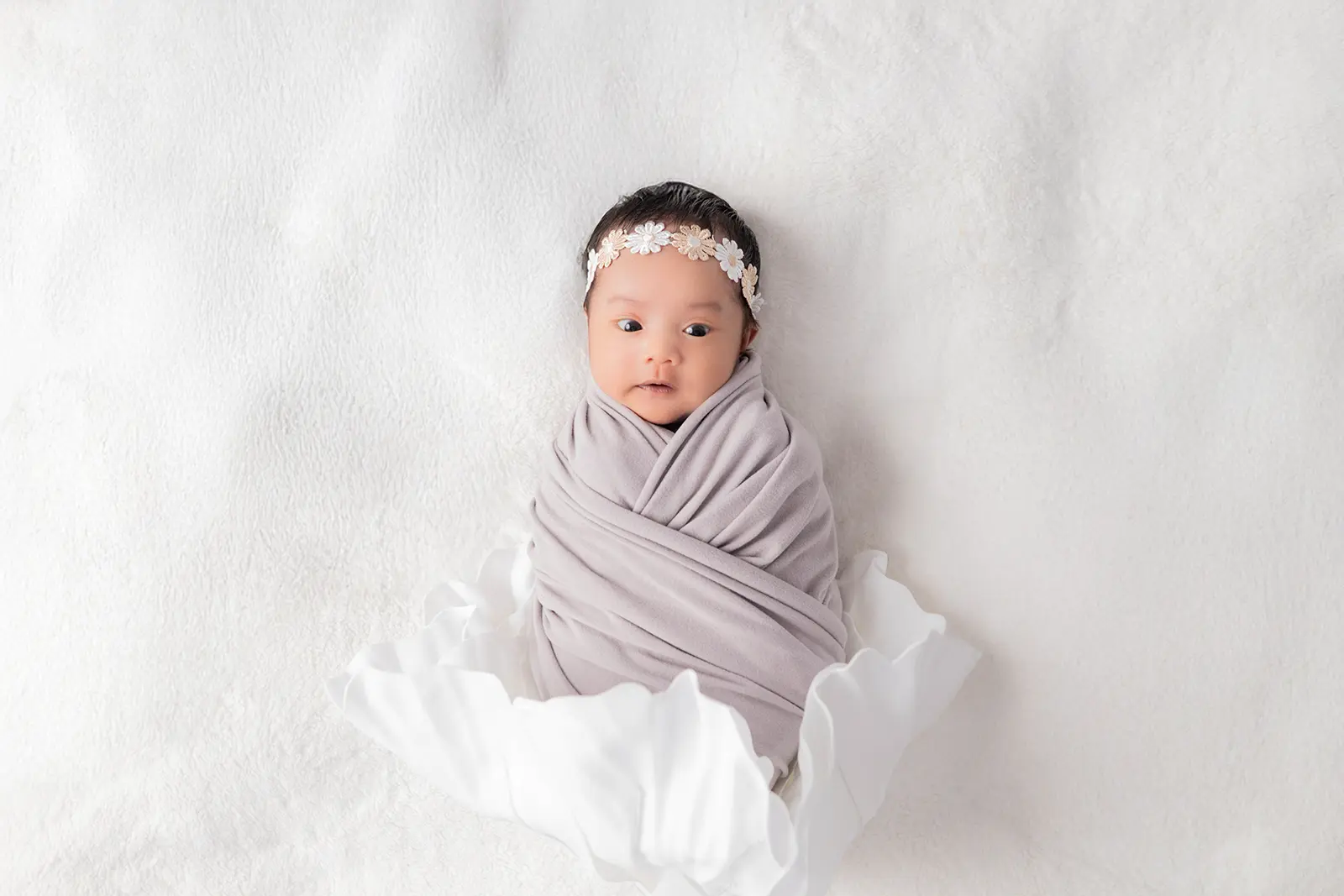
A soft wrap keeps the baby warm and settled, with the head resting naturally on a flat, supported surface. It is the easiest pose to light and needs the least editing, since the wrap covers most of the skin. Shoot from directly above.
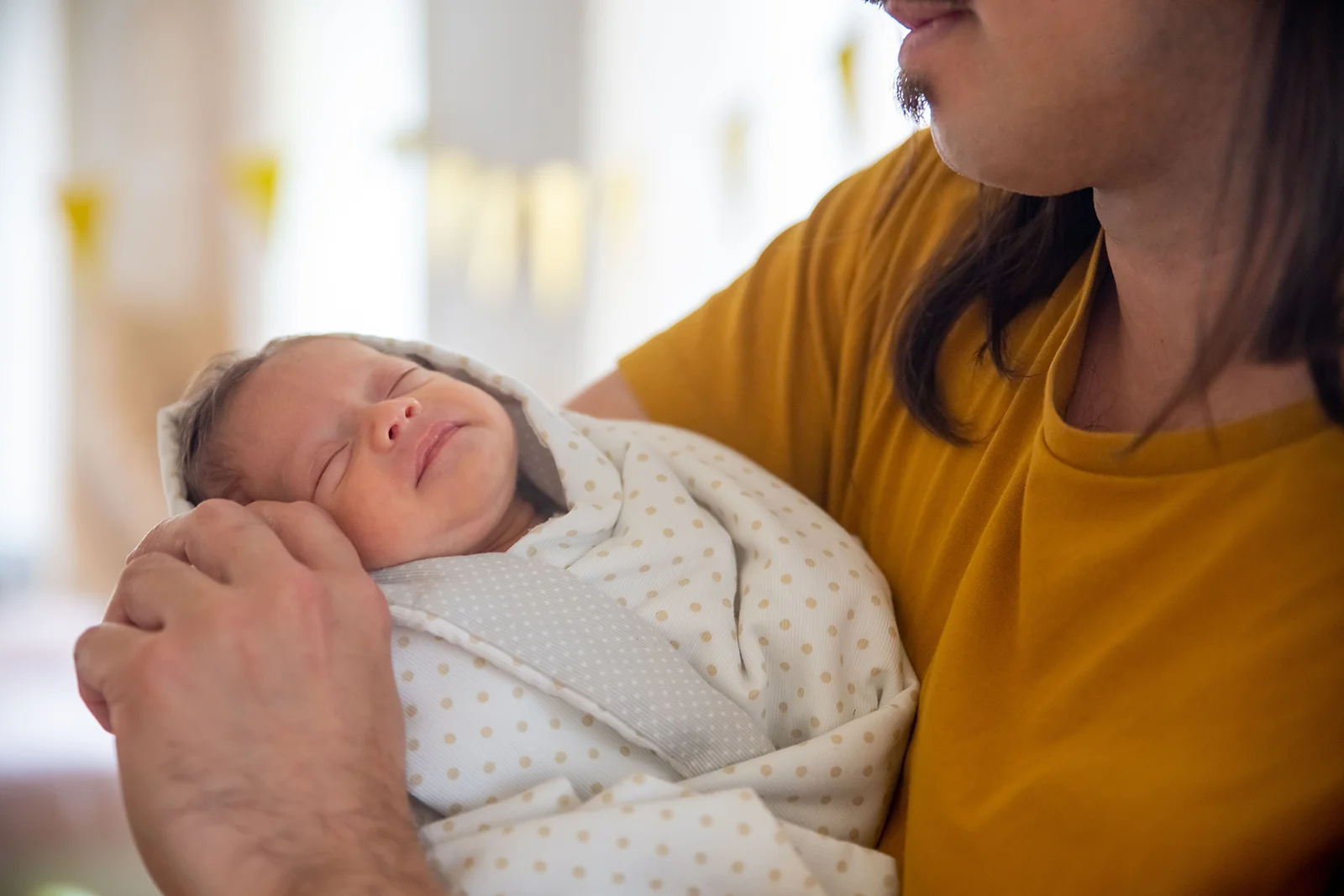
2. In a parent’s arms
The parent holds the baby the way they already do, with the head supported in the crook of the arm. Nothing needs arranging.
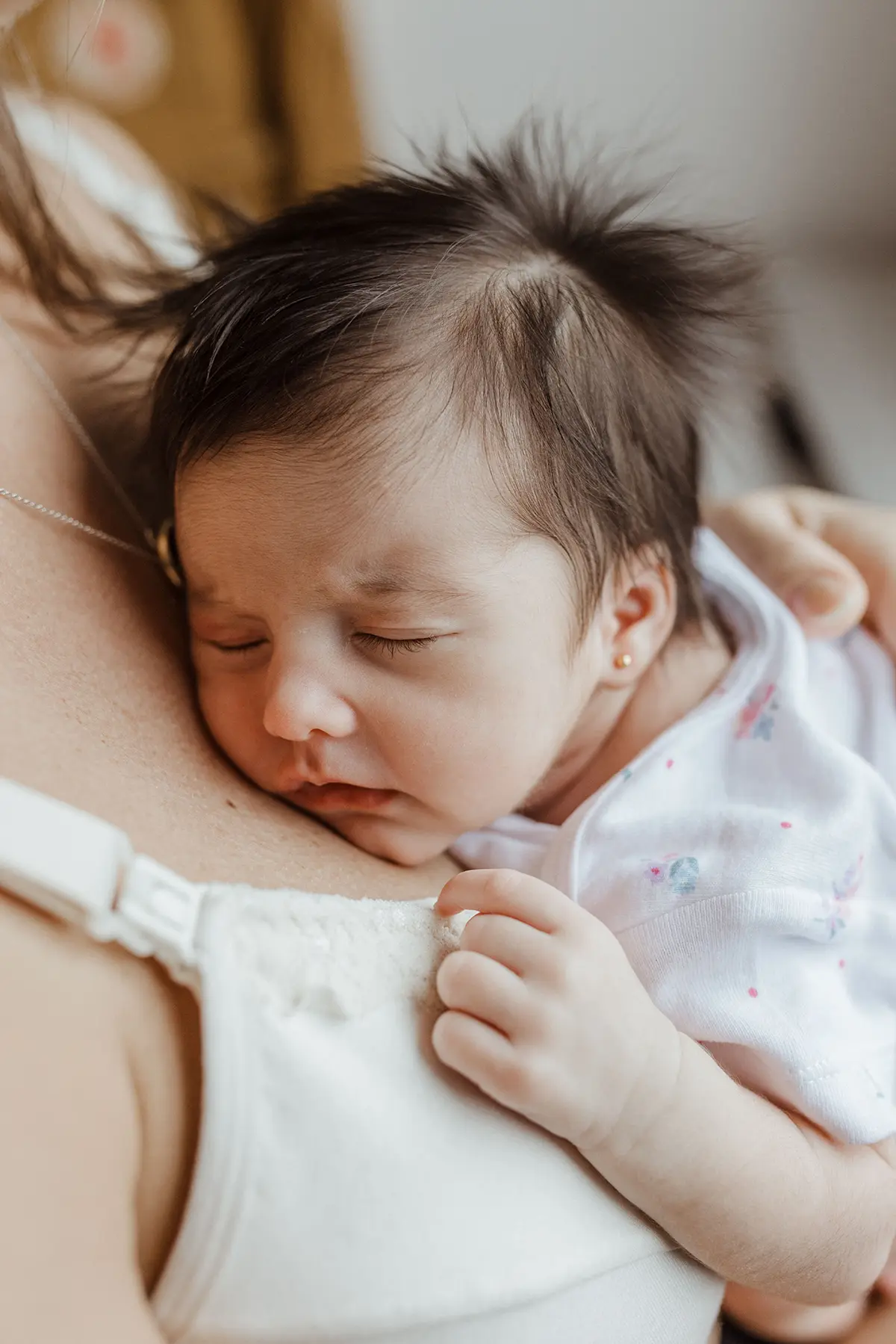
3. Resting on a parent’s chest
With the baby resting on an awake, reclined parent’s chest, you get a warm, quiet portrait. The parent’s hands stay on the baby throughout, and the baby’s nose and mouth stay visible and clear.
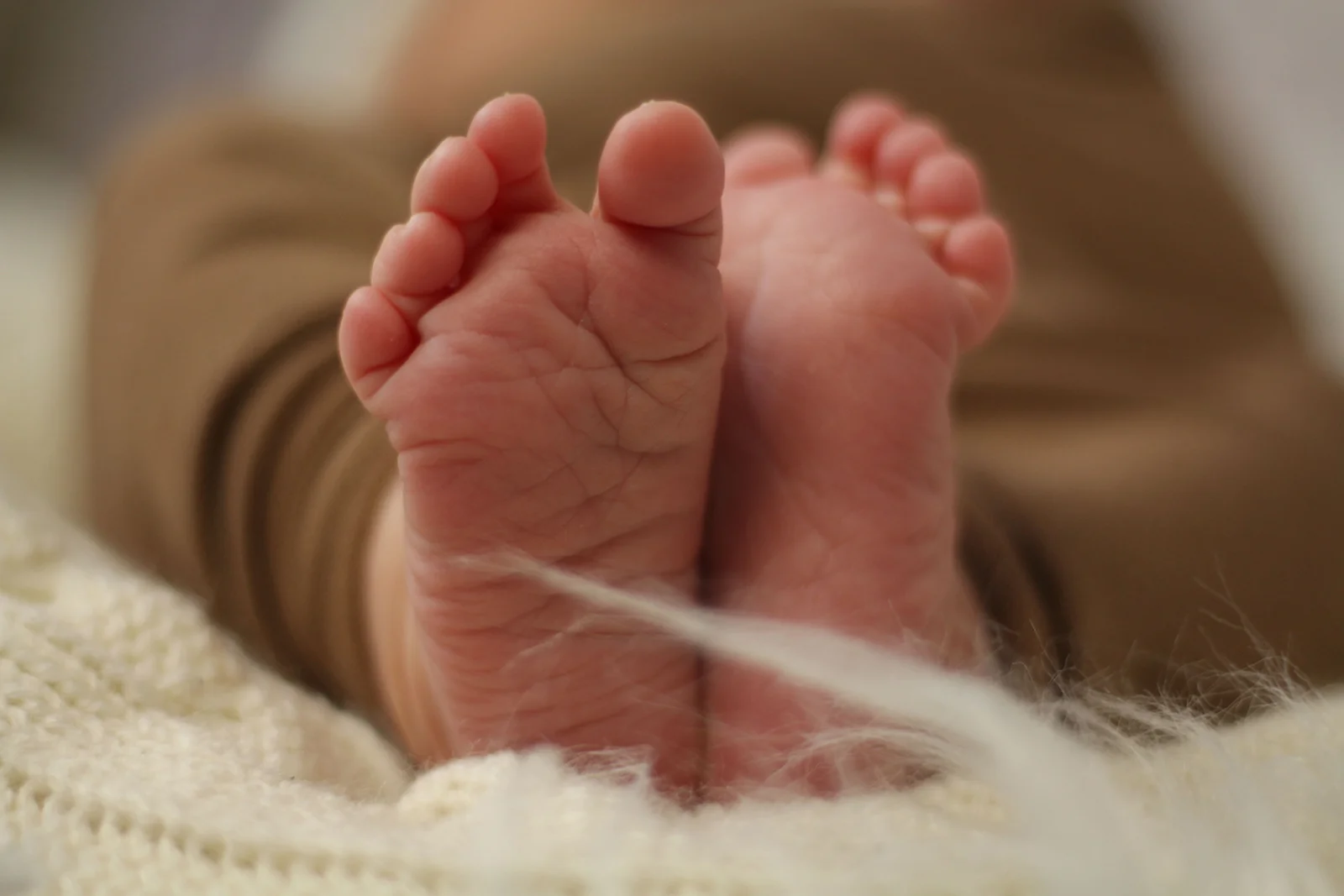
4. Detail shots
Hands, feet, lashes, lips and ears need no posing. Photograph them as the baby naturally lies, using a macro lens if you have one.
5. Awake on the back
If the baby wakes, keep shooting. A few minutes of open eyes and stretching on a soft blanket gives you an expression sleeping poses can’t. Our guide to newborn photo poses covers how a wider session flows.
Common mistakes
| Mistake | What it looks like | Better choice |
|---|---|---|
| Treating a composite as risk-free | “We used two frames, so it’s safe” | Remember that a composite addresses falls, not neck position |
| Reading sleep as comfort | Holding a position because the baby stayed quiet | Keep the neck neutral whether or not the baby reacts |
| Copying a pose from a video | Learning infant handling from a short clip | Take hands-on newborn safety training |
| Saying yes to avoid an awkward talk | Shooting a pose you’re unsure about because a parent asked | Explain why, and offer a gentler option |
| Chasing one viral image | A session built around a single difficult shot | Plan a simple gallery of natural poses |
What no pose can fix
Even the gentlest session leaves work for after the shoot. Newborn skin changes by the hour, with acne, peeling, redness and a yellow cast from jaundice, and wraps shed lint. That is work for the edit, so nobody has to move the baby again to fix it.
If you already have composite frames from an earlier session, an editor can still merge them without anything further from the baby.
Do it yourself or outsource?
If you shoot a few sessions a month and enjoy editing, doing it yourself makes sense and keeps your style consistent.
| Editing yourself works when | Outsourcing works when |
|---|---|
| You shoot a few sessions a month | You shoot several sessions a week |
| Skin work is quick for you | Skin and color take most of your evening |
| Your turnaround has room for it | Galleries are backing up |
For the rest of the session, from safety and light to props and handoff, read our newborn photography tips for photographers.
When editing is taking over your week, our newborn editors can take it on. We have hand-retouched images since 2010, every image gets a second check by a second retoucher at 100%, and the standard turnaround is 24 hours.
Send us your trial images. It’s free, with no card or sign-up.
Frequently asked questions
It has not been shown to be safe. A composite reduces the risk of a fall, but a 2020 medical review warns that the neck position itself may be hazardous. Leaving the pose out is the cautious choice.
The finished image is a composite. It combines at least two frames taken while adults support the baby, and the supporting hands are removed in editing.
No. Parents should not try to recreate this pose. For a sweet portrait at home, photograph the baby wrapped on their back or resting in your arms.
Many are concerned about strain on the head, neck and airway, and some have read the medical literature on passive posing. They prefer natural poses that don’t place the baby in an extreme position.
Wrapped poses on the back, the baby in a parent’s arms, the baby resting on a parent’s chest, detail shots and awake frames on a blanket all make a complete newborn gallery.